TB still kills millions worldwide. Traditional tests miss too many cases, and drug resistance is rising. Afrique One Researchers are working on biomarkers and non‑invasive diagnostics to detect TB earlier, track treatment, and fight resistance. A biomarker is simply a “signal” or a “clue” from the body that can be measured or interpreted to understand what is happening inside the body or the state of health of the person with regards to a health condition. This signal could be detected in blood, urine, or tissue, or it could even be a physical measurement like blood pressure. For example, blood sugar levels are a biomarker for diabetes, and cholesterol levels are biomarkers for heart health. Biomarkers for tuberculosis (TB) are measurable signals in blood, sputum, urine, or other samples that help detect infection, distinguish active from latent disease, monitor treatment response, and predict relapse. They provide the scientific “bridge” that allows One Health strategies to be more targeted, evidence-based, and effective in reducing TB’s impact globally.
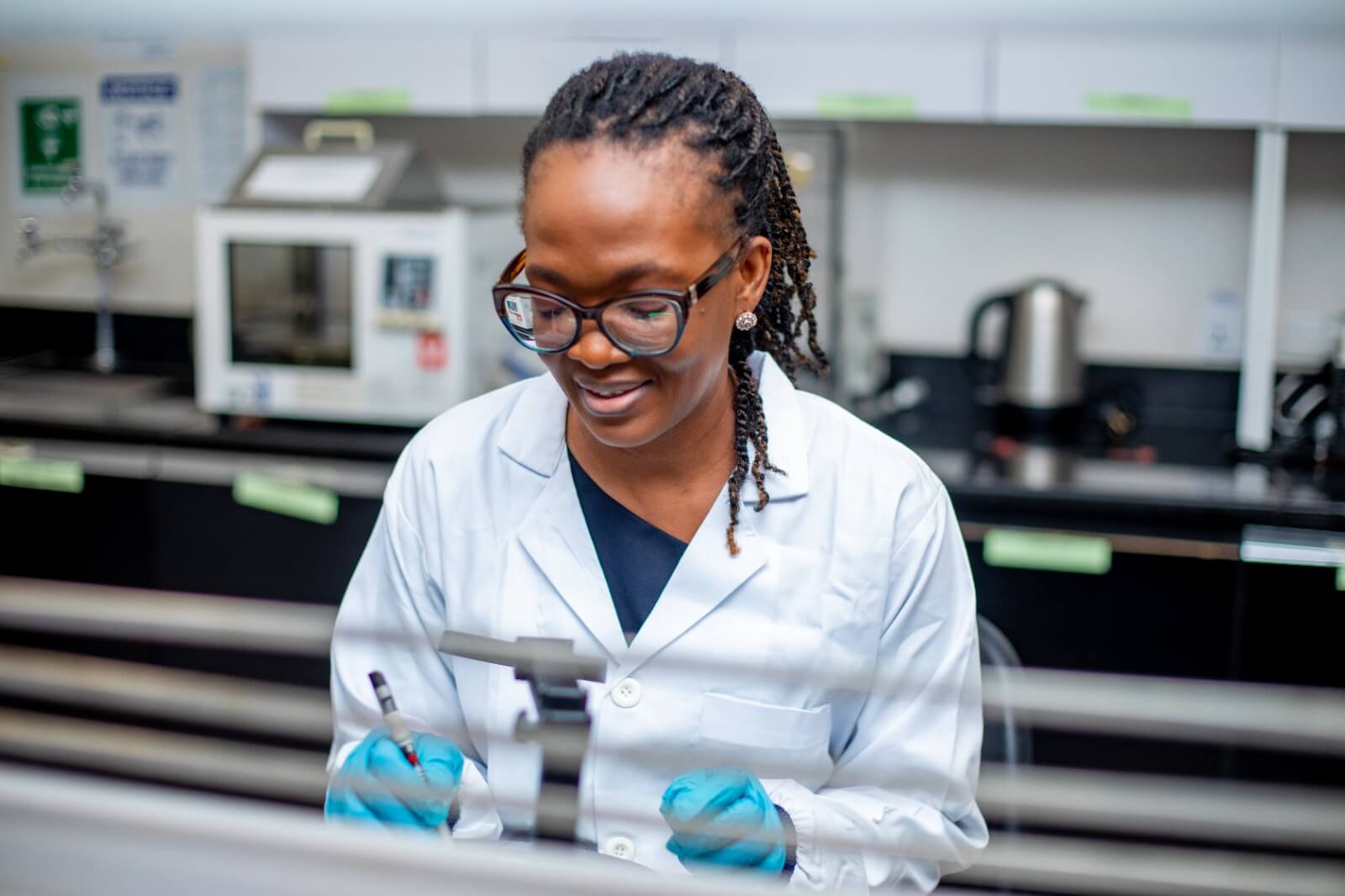
“Biomarkers are needed in the fight against TB because even though we already have TB tests, they are not perfect—they often need sputum samples, which are hard to collect from children or people with HIV, and they can miss cases or take weeks for results. Biomarkers are useful because they can show if someone has active disease or just latent infection, whether treatment is working, if drug resistance is present, and even help test vaccines. In simple terms: traditional tests tell us if TB is there, biomarkers can tell us much more about how the disease is behaving and how the patient is responding” said Prof. Gloria Ivy Mensah, from Noguchi Memorial Institute of Medical Research (NMIMR) and Afrique One.
A study Prof. Mensah conducted with the support of Afrique One together with other studies show that blood-based immune signals (cytokines) can be used as reliable markers to diagnose TB and distinguish active disease from latent infection without relying on sputum samples. This is a big step forward because sputum tests often fail in children, HIV-positive patients, or people who cannot produce sputum. By identifying specific cytokine patterns linked to active TB, the study opens the door to simpler, faster, and more accessible diagnostic tools that could strengthen TB control programs. It also lays the groundwork for using cytokines to monitor treatment response and track drug-resistant TB, making care more precise and reducing missed cases. In short, these findings while promising need validation across different settings before being considered as mainstream tools. With stronger labs, funding, and collaboration, it is possible to #EndTB.
Read more:
- Mensah GI, Amponsah JA, Alahaman NB, Anim-Baidoo I, Tetteh JKA, Addo KK and Koram KA (2025) Performance of eight serum cytokine/chemokine biomarkers in discriminating between active and latent tuberculosis infection in Ghana. Front. Immunol. 16:1600712. doi: 10.3389/fimmu.2025.1600712 https://www.frontiersin.org/journals/immunology/articles/10.3389/fimmu.2025.1600712/full