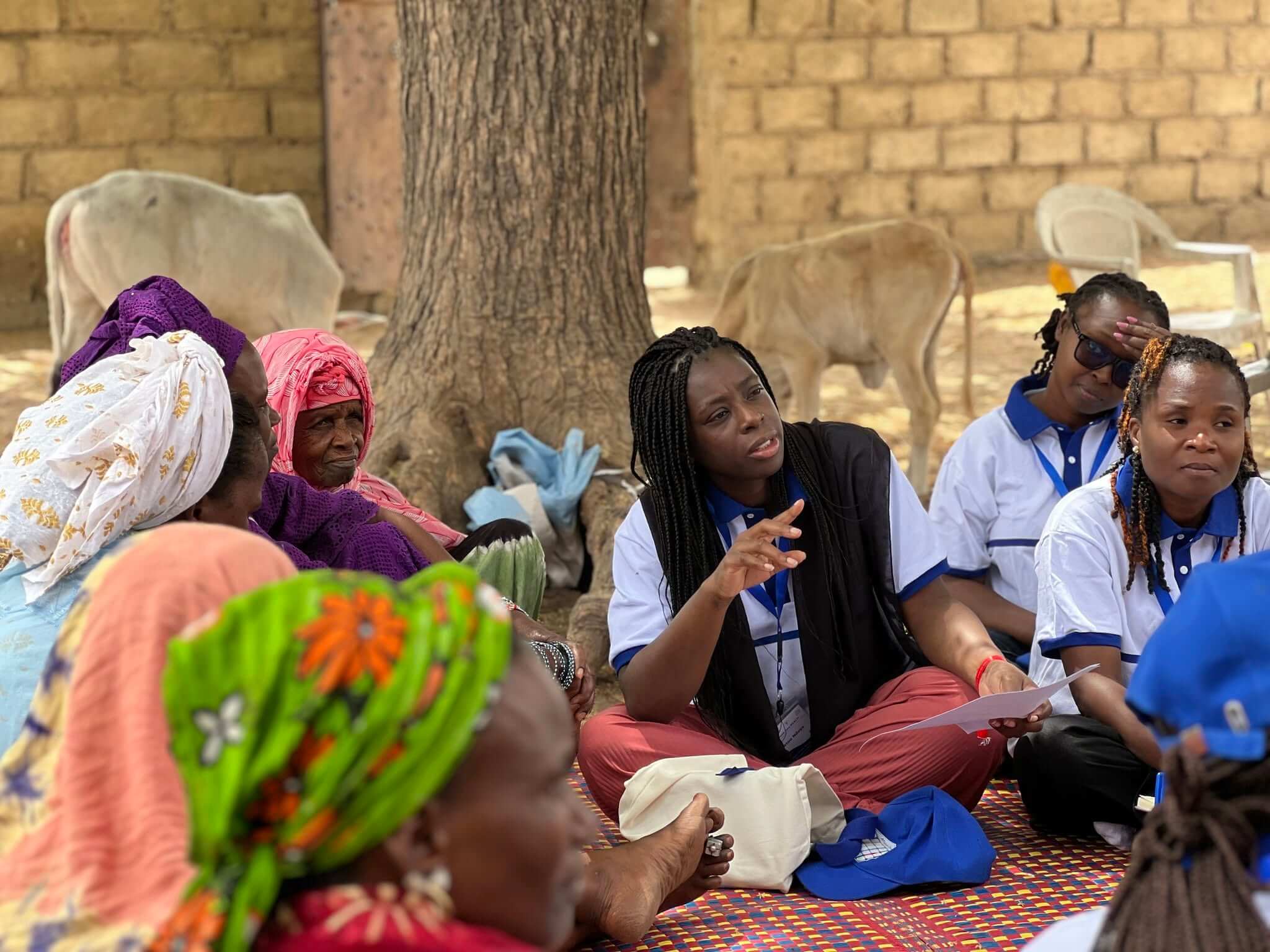
On May 5, 2026, members of the Afrique One consortium conducted a short field visit in several locations in Senegal, including the secretariat of the National One Health platform if Senegal; human and animal health technical service of the district of Mbour (Thiès Region); the rural community of Sinthiou Mbadane (Mbour district). Divided into three groups, Afrique One fellows were able to observe how the One Health approach is implemented at the national, departmental, and community levels.
As a pan-African research consortium that addresses health priorities in Africa from a ‘One Health’ perspective, Afrique One promotes the systematic integration of different scientific disciplines and sectors (biomedical and veterinary sciences, environmental and social sciences), as well as policymakers, practitioners and communities to find and implement practical and collective public health solutions. Therefore, engaging the various stakeholders of One Health at different levels (from the national to community levels) is an important precondition. Based on past experiences on the management of diseases outbreaks in Senegal, Afrique One researchers analysed intervention, preparedness and prevention strategies around disease outbreaks. That entails assessing coordinated national interventions and policy responses (One Health Platform), regional prevention and communication strategies (deconcentrated regional and departmental state agencies), local population responses and acceptability (communities).
At Community level
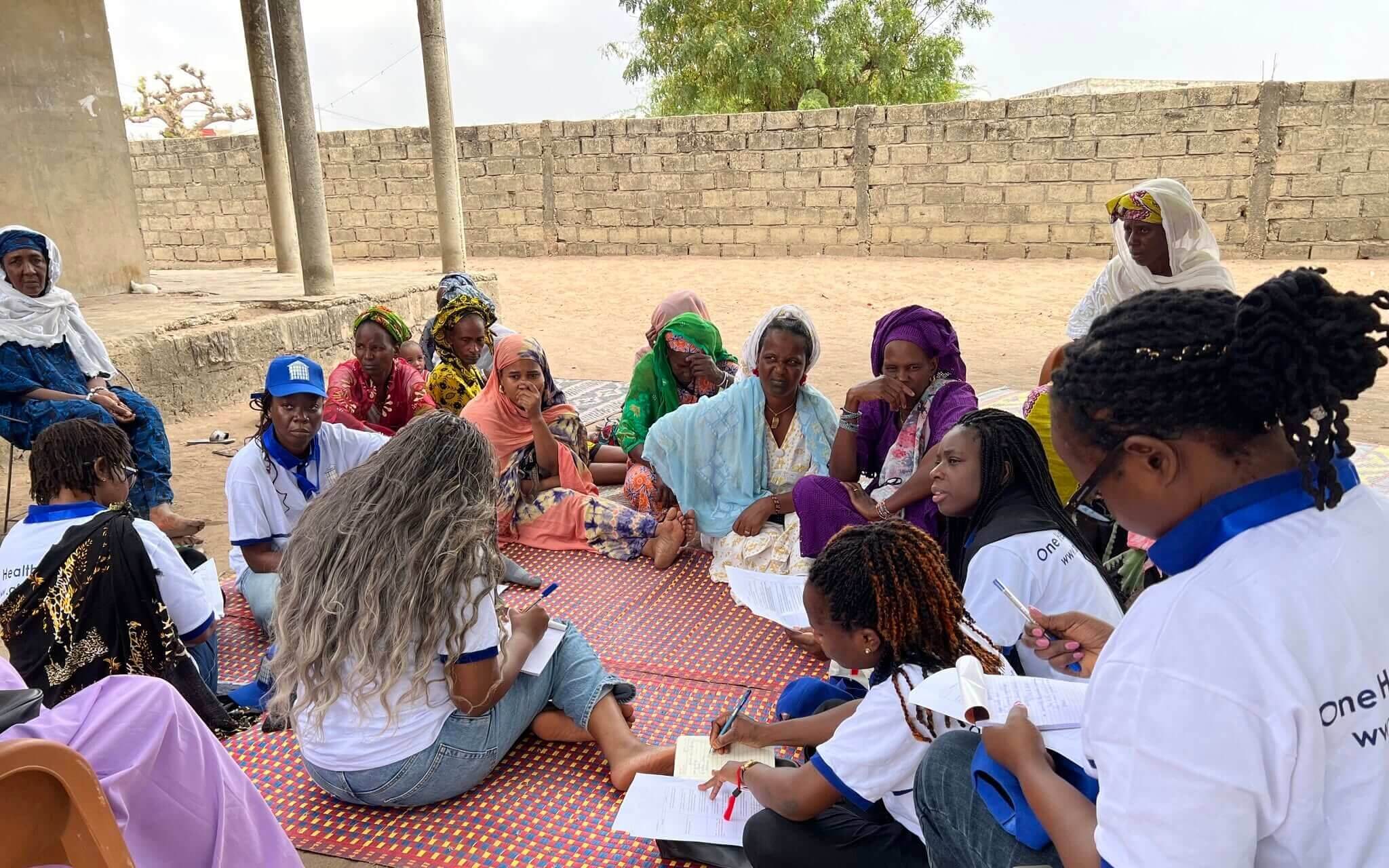
The fellows observed the practical foundations of community-based governance. Cross-disciplinary coordination committees hold monthly meetings there to share data (such as unusual wildlife behaviour or livestock abortions) that could help prevent health crises.
- The standard health-seeking pathway in the community progresses from traditional care/self-treatment to community management and only escalates to hospital referral when the situation becomes critical.
- For pastoral communities “human health is individual, while animal health is a community issue’’. Therefore, animal health is often the priority as livestock is their main source of livelihood and income.
- From a One Health perspective, the strong value attached to animal health does not necessarily imply that human life is less important; rather, it reflects how households, community wellbeing, and livestock health are interdependent.
- Different social groups have diverse thinking towards health challenges and how they should be tackled. The youth for instance youth has more progressive thinking about the presence of zoonotic diseases and their impact on the community wellbeing.
- The community displayed a gendered perception of health challenges. Women highlighted human health challenges based on their role as caregivers for the sick and young household members, while men emphasised on livestock health due to their central role in household and community livelihood.
These perspectives are crucial in guiding one health governance at the community level as it highlights the importance of taking into account different social groups in designing inclusive interventions.
At district level (sub-national level)
- The field visit shows that Mbour has an operational foundation for One Health coordination, supported by formal governance structures, surveillance systems, and multisectoral outbreak response mechanisms.
- The Departmental Epidemic Management Committee, led by the Prefect, serves as the main coordination platform during epidemics and brings together actors from human, animal, and environmental sectors.
- Human and animal health sectors collaborate during outbreaks, including joint investigations and awareness campaigns, as demonstrated during the recent Rift Valley Fever outbreak. Community-level actors, including community health workers, private veterinarians, women’s groups, religious leaders, and traditional healers, also contribute to surveillance and risk communication.
- The coordination of epidemic preparedness and response remains only partially integrated. Coordination is largely reactive and intensifies mainly during outbreaks. Surveillance and reporting systems operate separately across sectors, with limited interoperability between sectors.
- Major challenges identified include inadequate human resources, unequal resource distribution between sectors, limited operational involvement of the environmental sector, weak institutionalization of OH platforms, and behavioral barriers affecting vaccination uptake.
These district teams are linked to the national platform via a focal point and connected to the village health committees.
At national level
The study focused on Senegal’s One Health platform, building on the hypothesis that although Senegal has a solid One Health legal framework established in 2018 under the Prime Minister’s Office, operationalization faces persistent limitations. Despite strong coordination at the top, the speed of the multisectoral response on the ground remains the primary bottleneck.
Interactions with members of the One Health Secretariat reveal the following findings:
- Existence of a robust governance framework supported by an active coordination team and a comprehensive vision plan to 2050. The main strength identified was the political positioning at the Prime Minister level, which provides the necessary institutional authority and sustainability for multisectoral rules and coordinated action.
- Absence of a decentralized early warning system and limited presence of the platform at the subnational levels, including regional, departmental, and community levels.
- The absence of common intersectoral indicators and integrated digital platforms limits the ability of stakeholders to generate comprehensive situational awareness and support evidence-based decision-making during health emergencies.
- There is an unequal distribution of technical expertise, infrastructure, and financial resources across sectors. The human health sector is more resourced in terms of finance, personnel training and infrastructure than the animal and environmental sectors. This inequity has a significant effect on other sector visibility and participation to activities, projects, and inclusive decision-making.
- Community engagement is increasingly recognized as a critical component of outbreak preparedness in One Health era. However, the involvement of communities from the onset in the design of preparedness plans and surveillance strategies is still insufficient.
These visits shed light on the strengths, challenges, and coordination mechanisms employed by actors at various levels in response to health threats, whether they be emerging zoonotic diseases, neglected diseases, or environmental crises. By engaging directly with stakeholders, the fellows gained a better understanding of the complex interplay between human, animal, and ecosystem health. This field immersion fully achieved its educational goal: to connect science with local realities and prepare the next generation of African researchers to provide long-term support for the implementation of the One Health approach on the continent.