Afrique One, as part of the GAVI-PEP-PEV project, has reached a significant milestone: the provision of free rabies vaccines. The GAVI-PEP-PEV project aims to encourage communities to take ownership of measures to prevent and control rabies. Taabo and Bouaké are the towns in Côte d’Ivoire selected for the project’s pilot phase.
Building awareness together: identifying problems as a group
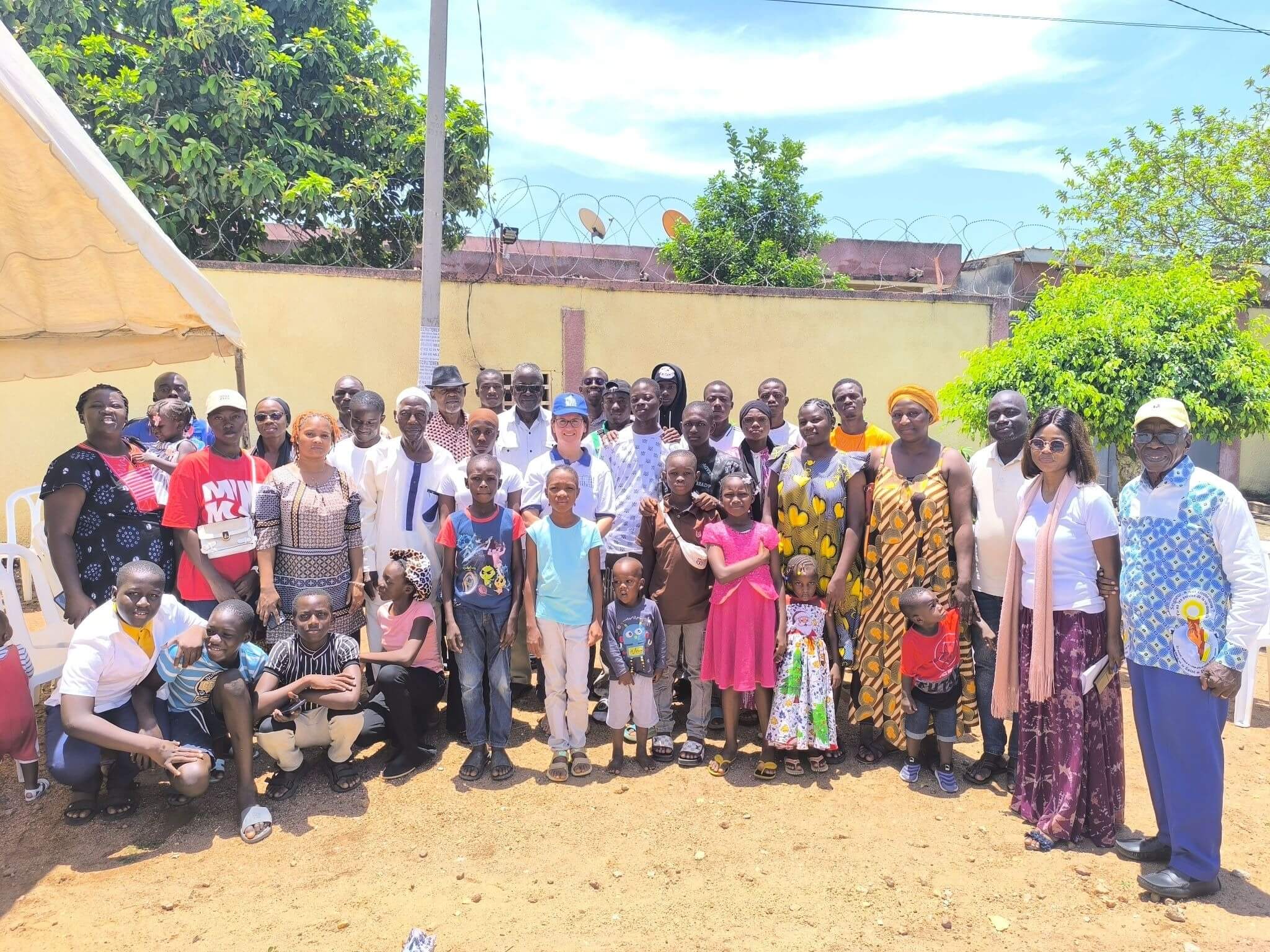
On 26 September 2025, Afrique One and its partners brought together health workers, vets, parents, teachers, community leaders and representatives from the Ministry of Health in Taabo. The aim was not to deliver a pre-prepared message, but to work with the local people themselves to develop a community engagement strategy tailored to their circumstances.
The method used — Human-Centred Design (HCD) — places communities at the heart of the solution. It recognises that the best responses to a public health problem come from those who experience it on a daily basis. In Taabo, participants identified the barriers preventing bite victims from seeking prompt treatment at health centers. These are: a lack of understanding of the disease, the distance to healthcare facilities, a failure to report cases, and local beliefs.
“When it comes to raising awareness, we need to give the public a more active role. Informing, consulting, involving, collaborating — and the most profound step of all is empowerment.”
— Dr Kathrin Heitz-Tokpa, Programme Manager, Afrique One.
This workshop laid the foundations for a preliminary action plan, which was finalized at the second workshop in Bouaké two months later.
On 15 November 2025, Bouaké hosted the second co-creation workshop. Five neighborhoods of the city were represented: Ahougnansou, Municipale, Dar-es-Salam, Cité CIDT and Adjé Yaokro. Alongside professionals from the Institut National d’Hygiène Pubique (INHP) and the Directorate of Veterinary Services (DSV), young people, children and community leaders gathered. On the agenda for this meeting:
- An awareness-raising session on rabies, led by doctors from the INHP.
- Group work to identify local barriers to post-bite consultations and propose practical solutions.
- The co-creation of a play: the participants wrote, rehearsed and performed the sketch themselves, with the support of a professional director.
Social innovation: theater as a public health tool. Working together to develop awareness-raising tools
Art and humor through theater are no longer mere accessories but clinical tools designed to ensure the successful completion of PEP.
The main objective of this initiative is to maximize the completion rate of Post-Exposure Prophylaxis (PEP) by drawing on deep cultural and local ownership. To address low patient attendance, often caused by an inadequate perception of risks and a lack of social anchoring of health messages, the strategy breaks with traditional top-down methods in favour of direct co-creation with local communities. By using innovative edutainment tools such as humor, art and social theater, the program succeeds in destigmatizing treatment and making it easier to remember protocols. This approach transforms perceptions of treatment, shifting PEP from a mere medical obligation to a shared community responsibility, and is currently undergoing a pilot phase in two test areas to assess its impact on sustainable behavioral change.
Residents of Bouaké have identified scenes from everyday life – such as being bitten by a dog in the street, or the role of a well-informed neighbour – to put on a play with the help of a director, in order to demonstrate what to do in the event of exposure. The play forms part of the community engagement strategy and is being performed in the Bouaké and Taabo neighborhoods alongside the roll-out of the rabies vaccine.
The communities also put forward some innovative proposals: setting up a reporting platform for bite incidents, appointing neighbourhood contact points, using WhatsApp groups to disseminate key messages, and providing the vaccine free of charge for children.
Make the vaccine available for humans and animals
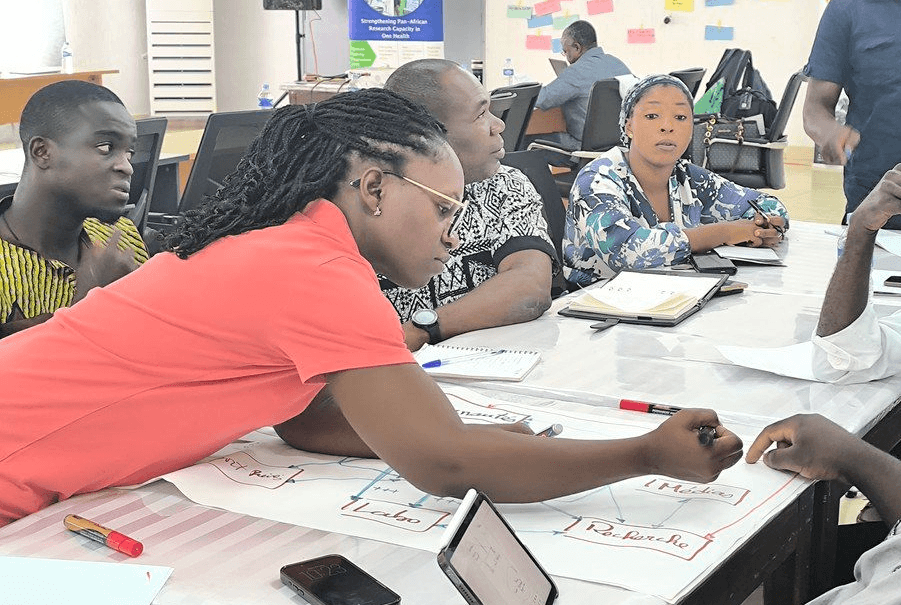
Raising awareness is not enough if the vaccine is not available. It was this conviction that guided the technical workshop held on 12 and 13 December 2025 in Taabo, the final stage of the GAVI-PEP-PEV project. The aim: to integrate the rabies pre-emptive vaccination program into the Expanded Programme on Immunisation (EPI) — the national program that has ensured the free distribution of vaccines throughout the country since 1978.
Facilitated by Professor Bassirou Bonfoh, Director of Afrique One, the workshop brought together the INHP, the DSV, the EPI focal points from the Taabo Health District, representatives from Taabo Hospital, doctors, researchers and community health workers (CHWs). Together, they drew up a consensus-based operational roadmap to bring the rabies vaccine closer to the population.
“This integration means that the PPE should not be disconnected from the Expanded Programme on Immunisation, which ensures nationwide coverage. It involves technical, logistical and financial aspects. The aim, in the pilot areas of Taabo and Bouaké, is to achieve zero cases of rabies through a targeted intervention.”
— Prof. Bassirou Bonfoh, Director of Afrique One, workshop facilitator
The strategy for decentralization and technological innovation aims to ensure universal national coverage of the EPI by optimizing logistical and financial resources. This roll-out is based on an ambitious scaling-up initiative, expanding the service from 30 specialist centers to nearly 2,000 local health centers through the systematic integration of the EPI into the Expanded Programme on Immunisation.
This ‘zero-distance’ approach drastically reduces costs for users whilst improving budgetary efficiency through the pooling of resources. To support this expansion, the use of blockchain technology ensures complete transparency in vaccine traceability and the security of the cold chain. This digital solution has enabled coverage to increase from 35% to 93% across two sites and promoted secure, unified management of patient records, positioning Côte d’Ivoire as a pioneering technological hub in the implementation of the ‘One Health’ strategy.
This human-led approach goes hand in hand with proactive veterinary surveillance and mass vaccination of dogs, coordinated by the DSV. At the same time, the decentralization of immunofluorescence (IF) diagnostic capabilities, led by the National Laboratory for Agricultural Development Support (LANADA), could transform the speed of biological confirmation, enabling real-time medical and veterinary decision-making as close as possible to the sources of infection. By combining the rigour of the DSV’s veterinary observations, the accuracy of LANADA’s decentralized tests, and community engagement through edutainment initiatives via the INHP, Côte d’Ivoire is building a model of public health resilience in which animal disease prevention becomes the first line of defense for human safety.
A key focus of the discussions: the role of community health workers. These frontline workers, who are based in neighborhoods and villages, can immediately refer someone who has been bitten to the appropriate treatment center.
“We need to involve community health workers, because someone in the community might be bitten and not go to the vaccination centre. Community health workers can easily refer them and provide them with the necessary information.”
— Dr Mathilde Tetchi, Head of Department, INHP Rabies Control Center
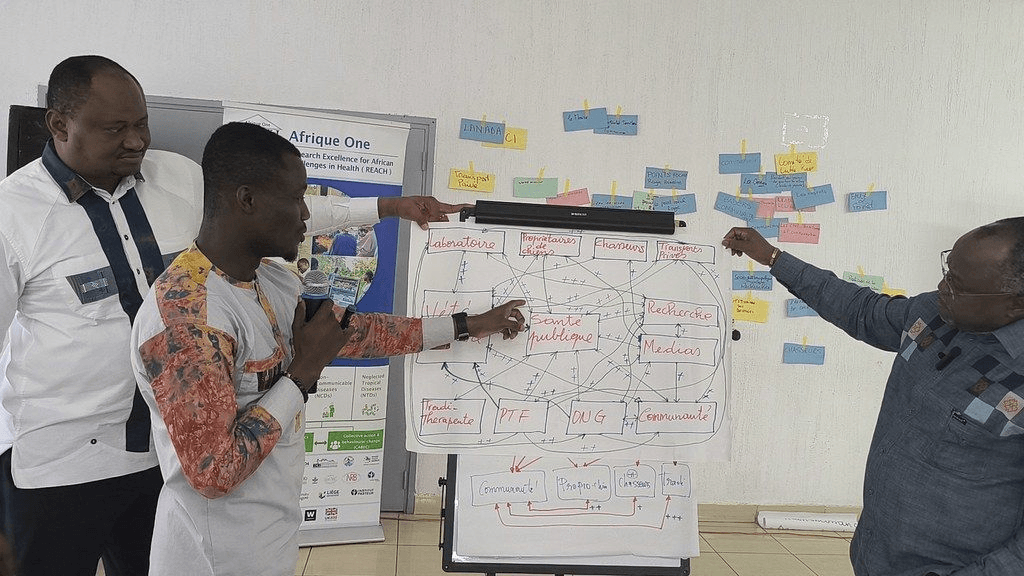
Following this technical workshop, a pilot phase co-funded by Afrique One was launched in the towns of Taabo and Bouaké, involving the opening of a forward post for the supply of rabies vaccines, distribution to surrounding health centers, and awareness-raising sessions through theater. Health workers have already been trained. Training has also been provided for community health workers and traditional healers.
Community engagement phase
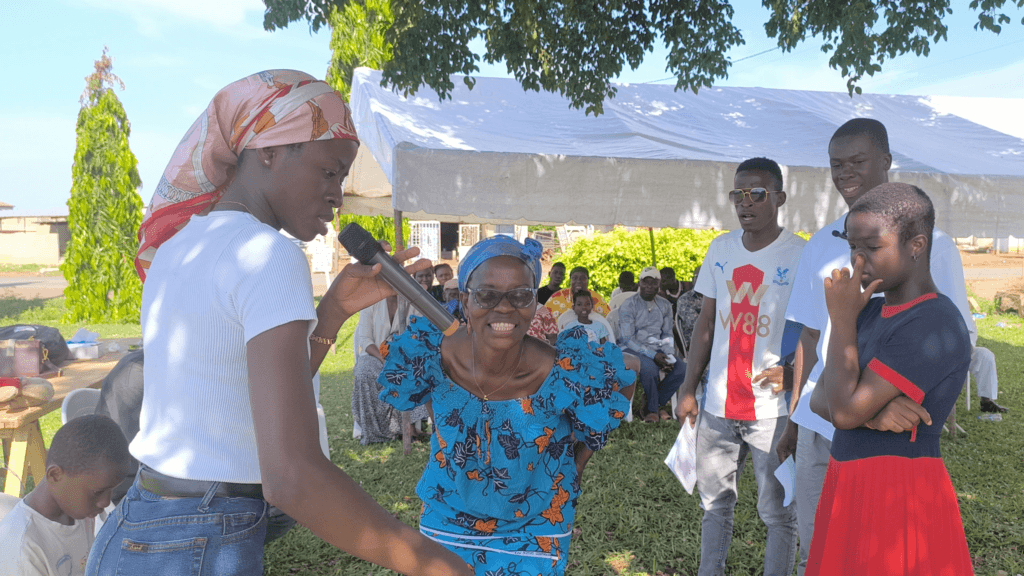
In March 2026, community engagement activities took place in the villages of Taabo, Kouamékro and two other villages in the Taabo sub-prefecture, as well as in Bouaké in the Municipal, Cité CIDT, Dar-es-Salam and Ahougnansou districts. The sketches directly reached over 1,000 people.
Afrique One has worked with local communities and various partners to establish a comprehensive program: vaccines available for both dogs and humans, an engagement strategy developed in collaboration with the communities, and awareness-raising tools created by the communities themselves. This project, supported by Gavi, the Centre Suisse de Recherche Scientifique en Côte d’Ivoire (CSRS), the Swiss Tropical and Public Health Institute (Swiss TPH), the Ivorian Ministry of Health through the INHP, and the Ivorian Ministry of Animal Resources through the DSV, paves the way towards the global goal: zero deaths from rabies by 2030.