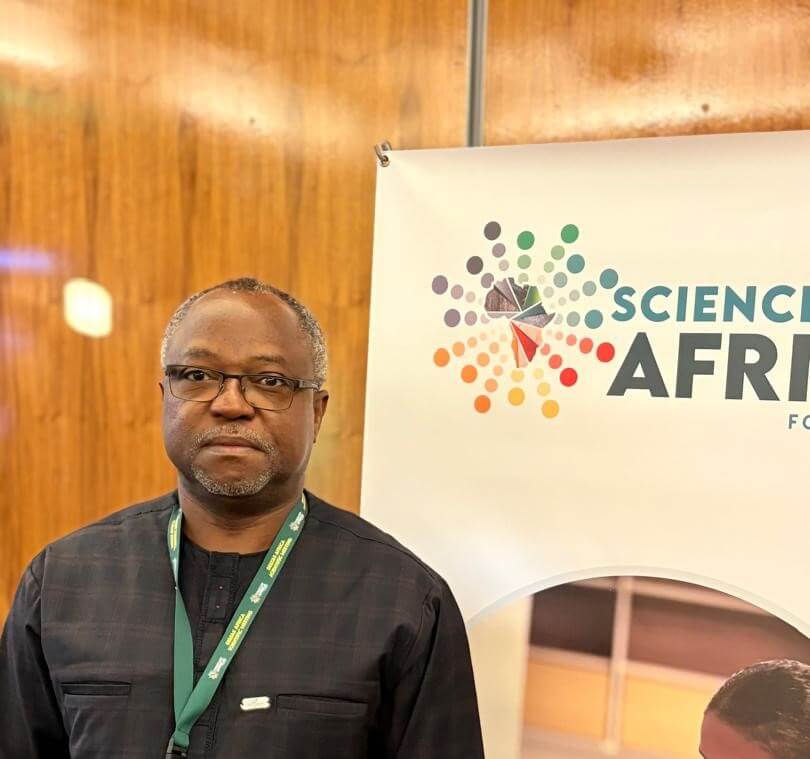
On the occasion of the annual meeting of Afrique One-REACH, held in Senegal from May 4 to 13, 2026, All For Sciences Media interviewed Professor Bassirou Bonfoh. Director of the Côte d’Ivoire-based consortium, he is one of Africa’s leading voices on the One Health approach.
In this exclusive interview, he highlights the governance challenges facing One Health platforms in West Africa. He also explains Senegal’s strategic choice to host the conference. The discussion explores the difficulties of cross-sector collaboration and the need for stronger partnerships. Finally, he shares perspectives on integrating One Health into African public policies.
Why did Afrique One choose Senegal as the host country for its 2026 annual meeting?
Senegal was not chosen at random. At the international conference on Lassa fever in Côte d’Ivoire, we met the Senegalese Minister of Health. Knowing our expertise in the One Health approach, he asked us to come and observe how the Senegalese platform operates and offer guidance.
We therefore decided to turn this assignment into a learning exercise for our researchers. We have nearly 60 students working on the “One Health” approach, and we wanted to expose them to governance issues.
The minister’s request specifically concerned a governance issue. We therefore organized the work around three levels: the national level, the district level, and the community level.
This mission became even more important following the Rift Valley fever and MPOX outbreaks, which revealed shortcomings in information sharing across sectors.
What makes the Afrique One consortium unique?
Afrique One is a consortium that builds the capacity of young researchers in the One Health approach. We have master’s, doctoral, and postdoctoral students from several African countries.
We offer them short training courses on topics of their own choosing: governance, data analysis, scientific writing, science diplomacy, and community engagement.
But what truly sets Afrique One apart is our annual gathering. Over the course of two weeks, students participate in intensive training sessions and present their scientific work to the scientific advisory board.
The goal is not merely to produce scientific publications. We also want to conduct research that is useful to communities and informs policy decisions.
Why does governance remain the main challenge for the “One Health” approach in Africa?
Today, the challenge is no longer purely scientific. The most complicated aspects remain organization and governance. The technical and scientific framework is easier to put in place. Where difficulties arise is in coordination between sectors and institutions.
Since 2016, several West African countries have established “One Health” platforms. But the levels of progress vary. Some countries have placed leadership under the Ministry of Health, while others have placed it under the Office of the Prime Minister or the Office of the President.
The example of Senegal shows that leadership at the Prime Minister’s Office is a valuable model because it facilitates the involvement of various sectors.
However, simply establishing a platform through an executive order is not enough. We need people capable of implementing the system, funding, and, above all, joint action plans.
What exactly does the “One Health” approach entail?
The One Health approach can be summarized in three main ideas.
First, it is a complex health issue that cannot be solved by a single sector. Take the example of Rift Valley fever: the mosquito transmits the disease from animals to humans, but this mosquito also depends on the environment and climate change.
Second, because the issue is complex, several sectors must work together: human health, animal health, and the environment.
Finally, this collaboration must generate added value. When information is shared in a timely manner, we can prevent human, animal, and economic losses.
The real value of One Health lies precisely in prevention and the ability to anticipate health crises.
Which African models are currently inspiring Afrique One?
The model that currently inspires us is that of Madagascar. Thanks to funding from the World Bank, the country has been able to complete all the necessary steps, from the situational analysis to the investment framework.
Today, Madagascar is working to establish a fund dedicated to monitoring, preventing, and responding to health crises.
This is the kind of model we hope to see emerge in other African countries.
At Afrique One, we are also developing assessment tools to support national platforms and provide them with tailored strategies for action.
What is your vision for the future of the One Health approach in West Africa?
Science already has the necessary information on emerging diseases and their transmission. The real challenge today is to convince policymakers of the cost of inaction.
When a disease emerges, the economic losses are enormous. Yet a small fraction of those costs could be invested in prevention.
We must also raise awareness at all levels. The media plays a vital role in informing communities, encouraging early disease detection, and demonstrating the benefits of cross-sector collaboration.
Health is no longer just a human issue. It is a global concern and must be addressed through multiple sectors working together.
Interview by All for sciences Media : https://allforsciences.media/prof-bassirou-bonfoh-la-sante-nest-plus-seulement-une-question-humaine-elle-est-globale/